
Tax residency certificate
Tax Residency Certificate: Full Application Guide
A tax residency certificate is the document that proves you are a tax resident of the UAE, and it is the document a foreign tax authority or a bank asks for before it gives you treaty relief. This guide walks through the whole application, in order: the eligibility tests, the document pack, the fees, the EmaraTax filing steps, the official timeline, and the fixes for the rejections that catch most applicants. Every figure here comes from the Federal Tax Authority, Cabinet Decision No. 85 of 2022, Ministerial Decision No. 27 of 2023, Federal Decree-Law No. 47 of 2022, and the UAE Ministry of Finance.
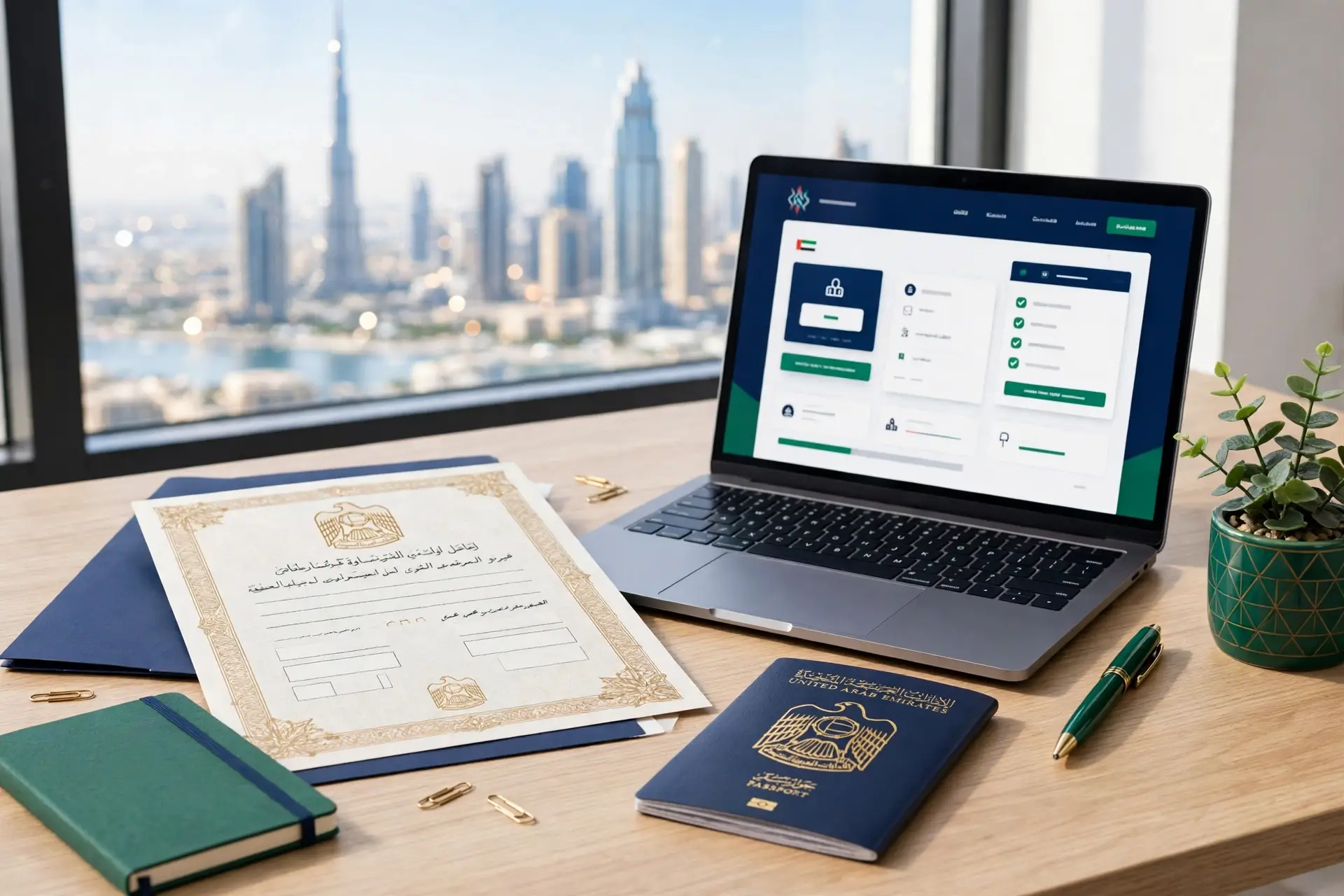
The certificate, in plain terms
What a tax residency certificate is
A tax residency certificate, often called a TRC, is an official certificate issued by the Federal Tax Authority (FTA) that confirms you were a tax resident of the UAE for a stated period. It does not prove where you live in a general sense. It proves, for tax purposes, that the UAE was your place of tax residence during the period printed on the certificate, under the rules set out in Cabinet Decision No. 85 of 2022 and Ministerial Decision No. 27 of 2023.
Most people apply for one of three reasons. The first is treaty relief: a foreign tax authority, or a payer in another country, wants proof of UAE residence before it applies the reduced withholding rate on dividends, interest or royalties under a double taxation agreement. The UAE has concluded 137 double taxation agreements, per the UAE Ministry of Finance, and the certificate is the document that lets you use the treaty that covers your income. The second reason is banking: a bank asks for proof of tax residence when it opens an account or reviews an existing one. The third is employment or a contract: an employer or a client wants a formal record of where you are tax resident.
Applications run through the FTA EmaraTax portal and the TRC platform at trc.tax.gov.ae, which is available 24 hours a day, 7 days a week. On approval, the digital certificate is downloadable from EmaraTax and emailed to you. A printed hard copy is available for an extra fee. The certificate covers one Tax Period or any other 12-month period you select, and it cannot cover a future period or a period longer than 12 months. There is no automatic renewal: each period needs a fresh application.
One point to settle before you start: a TRC proves residence, it does not decide your tax bill on its own. How much tax you pay, and where, still depends on the treaty, the type of income, and the rules of the other country. The certificate is the proof that opens the door to treaty relief, and the rest of this guide shows you how to get it without the common mistakes that lead to rejection.
Eligibility for individuals
Do you qualify? The three tests for individuals
For a natural person, the FTA applies three tests, and you need to meet only one of them. The tests come from Article 11 of Federal Decree-Law No. 47 of 2022 and the decisions that follow it. Read them in order, and check yourself against each one before you pay the fee, because the fee is not refunded if you fail.
Test 1: centre of interests
You qualify if the UAE is your usual or primary place of residence and the centre of your financial and personal interests. This is the test for people whose life is centred in the UAE even when their travel pattern is uneven: the family home is here, the bank accounts are here, the business or the job is here, and the UAE is the place you return to. There is no day count in this test. What matters is the weight of your ties, and the documents that show them, such as a tenancy contract, a salary certificate, and bank statements that show your financial life running through the UAE.
Test 2: 183 days or more
You qualify if you were physically present in the UAE for 183 days or more in a consecutive 12-month period. The days need not be consecutive, and partial days count, so a day on which you arrive late in the evening still counts as a day of presence. The period is any consecutive 12 months, not necessarily a calendar year, and the entry and exit report from the immigration authorities is the record the FTA checks. Worked example: a consultant who spent 200 days in the UAE across a 12-month period, travelling in and out for client work, meets this test on the day count alone, even if she holds no other tie beyond her residence visa.
Test 3: 90 days plus ties
You qualify if you were physically present in the UAE for 90 days or more in a consecutive 12-month period, and you are a UAE or GCC national or hold a valid UAE residence permit, and you have a permanent place of residence in the UAE or employment or a business in the UAE. All three parts must hold together: the 90 days, the nationality or residence permit, and the home or the work tie. Partial days count here too, and the days need not be consecutive. Worked example: a resident who spent 100 days in the UAE, holds a valid residence visa, rents a flat on a certified tenancy contract, and works for a local employer meets this test, because the 100 days clear the 90-day floor and the tenancy contract and the job supply the tie.
Check yourself in this order: if your day count clears 183, apply on that test, because it is the simplest to evidence. If it does not, check the 90-day test and gather the tie documents before you apply. If neither day test fits, the centre of interests test is your route, but expect the FTA to look closely at the documents, so build the pack with care. And remember the timing rule: a natural person can apply as soon as the residency criteria are met, so do not apply for a period that has not started yet.
Eligibility for companies
Companies: who qualifies
A company, or juridical person, qualifies for a tax residency certificate on one of two routes. The first route is incorporation: the company was incorporated, formed or recognised under UAE law, including in a free zone. A mainland company, a free zone company, and a company formed under any UAE law all sit on this route. The second route is effective management and control: a foreign juridical person qualifies if it is effectively managed and controlled in the UAE, which means the real decisions about the company are made here, not only on paper.
One rule catches many applicants out: a company must have been established for 12 months before it can apply. A company incorporated under 12 months ago cannot get a certificate yet, however strong its ties are, and an application filed too early is rejected with the fee lost. Count the 12 months from the date of incorporation or formation, and apply only once the year has passed.
Timing matters for companies in a second way. A juridical person may apply after 3 months into the period it wants covered, which means part of the period must already have run before the application goes in. The certificate still cannot cover a future period, and it cannot cover more than 12 months, so plan the period you select around the year that has already passed, not the year ahead.
A foreign branch or an offshore company that is not effectively managed and controlled in the UAE does not qualify, and neither does a company that cannot show the management link. If your company is foreign-registered, gather the evidence of where decisions are made, who makes them, and where the board meets, before you pay, because that evidence is what the FTA will ask to see.
The document pack
The document pack: individuals and companies
The FTA asks for different documents depending on who applies and which route they apply on, so build your pack from the list that fits you, not from a generic list. The tables below set out the documents the FTA lists for each route. Every document must show the same name, spelled the same way, because a name mismatch across documents is one of the most common reasons for rejection.
Individuals: what to prepare
| Document | When it is needed |
|---|---|
| Emirates ID and residence visa, or passport plus official entry and exit report (ICP or GDRFA) | All individual applications: identity and presence evidence |
| Salary certificate or proof of employment or business | 90-day route: proves the employment or business tie |
| Certified tenancy contract or title deed, plus a utility bill | 90-day route: proves a permanent place of residence in the UAE |
| Source of income or salary certificate, plus a 6-month local bank statement within the financial year | Treaty-purpose applications: shows the income the treaty will cover |
Bank statements are route and treaty dependent, and the FTA may request them. They are not listed here as mandatory for every application.
Companies: what to prepare
| Document | When it is needed |
|---|---|
| Trade licence | All company applications |
| Lease agreement | All company applications: proves the UAE premises |
| Corporate tax registration number (TRN), if applicable | Where the company holds a corporate tax TRN |
| Audited financial statements certified by an independent auditor, plus a 6-month local bank statement | Treaty-purpose applications |
The FTA does not list a memorandum of association as a required document for a TRC application, so do not treat it as part of the pack.
Two habits save most applications. First, check the names: the name on your passport, your Emirates ID, your tenancy contract and your salary certificate must match, letter for letter, and any difference, even a middle name dropped on one document, can trigger a query. Second, check the entry and exit report covers the full period you claim. A report that stops short of the period, or a report from the wrong authority, is a common reason for rejection, so request the report for the exact dates you will put on the form, and check it before you upload it.
Fees
Fees: what a TRC costs
The fee depends on who applies and whether the applicant holds a corporate tax registration number. Every fee below includes a non-refundable AED 50 submission fee, which is paid upfront when you file, and which is not refunded if the application is rejected. Since 3 October 2025 the submission fee is paid at the start, before the FTA reviews the file, so check your eligibility and your documents before you pay, not after.
FTA fees for a tax residency certificate
| Applicant | Certificate fee | Total with AED 50 submission fee |
|---|---|---|
| Corporate-tax-registered applicant (electronic certificate) | AED 500 | AED 550 |
| Individual without a corporate tax TRN (electronic certificate) | AED 1,000 | AED 1,050 |
| Company or juridical person without a corporate tax TRN (electronic certificate) | AED 1,750 | AED 1,800 |
| Printed hard copy, per copy | AED 250 | AED 250 per copy, in addition to the electronic fee |
Fees are paid upfront and are not refunded if the application is rejected. A fresh application needs a new fee payment.
The cheapest route is the corporate-tax-registered route, at AED 550 in total, so if your company is registered for corporate tax, apply under that registration and select the correct TRN on the form. Selecting the wrong TRN is itself a common rejection reason, so check the number twice. If you still need to register for corporate tax, read our guide to corporate tax registration on EmaraTax first, and see our corporate tax page for the registration rules that decide whether your company needs a TRN at all.
Filing
How to apply on EmaraTax, step by step
The application runs on the FTA EmaraTax portal and the TRC platform, and the whole filing is online. There is no paper form and no counter visit. Work through the steps in order, and do not pay the fee until the pack is complete, because the fee is not refunded.
- Run the eligibility self-check first: pick the test you meet, individual or company, and confirm the period you will claim has started and is no longer than 12 months.
- Log in to EmaraTax and open the tax residency certificate service on the TRC platform.
- Select the applicant type, individual or juridical person, and select the correct corporate tax TRN where one applies.
- Select the period the certificate should cover, then enter the residency details that match your test: the day count, the ties, or the incorporation and management details.
- Upload the document pack for your route, checking that every name matches and that the entry and exit report covers the full claimed period.
- Pay the fee, including the AED 50 submission fee, upfront, and keep the payment receipt and the application reference number.
- Watch for FTA queries in EmaraTax and reply with the document asked for, because the 10 business day clock runs from receipt of a complete application.
If you would rather have the filing prepared and handled for you, advisory firms offer to prepare the pack and handle the filing, and we provide all services, ourselves and with our licensed partners, delivered through our FTA-registered tax agent partners. Our tax residency certificate service prepares the document pack, checks it against the rejection reasons in this guide, and handles the EmaraTax filing for you, so the application goes in clean the first time.
Timeline
How long it takes
The FTA official service standard is 10 business days from receipt of a complete application for an electronic certificate. Printed copies take 5 business days more. That clock starts when the FTA has a complete application in hand, not when you first open the form, so a file that goes in with a missing document does not start the clock, and a query from the FTA pauses it until you reply.
In practice, the delays that stretch the timeline are almost all document delays: a name mismatch that needs a corrected document, an entry and exit report that does not cover the claimed period, or a treaty-purpose file that needs audited statements or a bank statement the applicant did not have ready. Each query adds days while you gather the document, so the fastest applications are the ones where the pack was checked before payment.
Plan around the official figure, not around a shorter number you may see elsewhere. If you need the certificate for a bank deadline or a treaty claim, file at least a month before you need it in hand, so a single FTA query does not break your deadline. On approval, the digital certificate is downloadable from EmaraTax and emailed to you, and a printed copy, if ordered, follows the extra 5 business days.
Rejections
Why applications are rejected and how to fix them
Most rejections come from a small set of fixable errors, and the fee is lost each time, so it pays to check the list before you file. The table below gives the common reasons, the fix for each, and what to do before you pay again.
Common rejection reasons and fixes
| Reason | Fix before you re-apply |
|---|---|
| Name mismatch across documents | Make every document show the same name, spelled the same way, and get a corrected document where one differs |
| Entry and exit report does not cover the claimed period | Request a fresh report from ICP or GDRFA that covers the full period you claim |
| Applied for a future period, or a period longer than 12 months | Select a period that has started and is no longer than 12 months |
| Company incorporated under 12 months ago | Wait until the company has been established for 12 months, then apply |
| Foreign branch or offshore company, with no effective management and control in the UAE | Do not apply until the management and control evidence is in place, or check whether the company qualifies at all |
| Wrong TRN selected on the form | Check the corporate tax TRN against the EmaraTax record and select the correct one |
Fees are not refunded on rejection. Re-application means a fresh application with a new fee payment.
If your application is rejected, the fee is not refunded, and re-application means a fresh application with a new fee payment. Before you pay again, fix the reason the FTA gave, and re-check every document in the pack, because a fresh application with the same error in it is likely to be rejected again. The cheapest rejection is the one you catch before you pay, so run the table above as a checklist on the finished pack, line by line, before you submit.
Validity and renewal
After approval: validity and renewal
A tax residency certificate covers one Tax Period or any other 12-month period you select, and it cannot cover a future period or more than 12 months. The period is printed on the certificate, and a foreign tax authority or a bank will read that period, so make sure the period you select is the period you actually need the certificate for, whether that is a treaty claim for a given year or a bank review for a given period.
There is no automatic renewal. When the period ends and you need a certificate for the next period, you file a fresh application, with a fresh fee payment and a fresh document pack. A natural person can apply as soon as the residency criteria for the new period are met, and a juridical person may apply after 3 months into the new period. Keep the previous pack as a template, but do not reuse its documents blindly: the entry and exit report, the bank statements and the salary certificate all need to match the new period.
Once the certificate is issued, the next step is using it. Our guide to tax residency certificate treaty benefits explains how the certificate is used to claim relief under the UAE double taxation agreements, which treaties cover which income, and what a foreign tax authority expects to see alongside the certificate. Read it before you send the certificate to a payer or an authority abroad, so the claim goes in with the right supporting documents attached.
Frequently asked questions
Your TRC questions, answered
What is a tax residency certificate used for?
A tax residency certificate proves you are a tax resident of the UAE for a stated period, so a foreign tax authority, a bank or an employer can treat you as a UAE resident under a double taxation agreement. People use it to claim treaty relief on income such as dividends, interest and royalties, to show a bank or an employer where they are tax resident, and to support a claim that income should not be taxed twice. The UAE has concluded 137 double taxation agreements, so the certificate is the document that lets you use the treaty that covers your income.
How many days do I need to spend in the UAE to get a TRC?
There is no single day count that fits everyone, because the FTA applies three tests and you need to meet only one. You qualify if the UAE is your usual place of residence and the centre of your financial and personal interests, or if you were physically present in the UAE for 183 days or more in a consecutive 12-month period, or if you were present for 90 days or more in a consecutive 12-month period and you hold UAE nationality or a valid UAE residence permit and you have a permanent place of residence in the UAE or employment or a business in the UAE. Partial days count, and the days need not be consecutive.
Can companies get a TRC too?
Yes. A company qualifies if it was incorporated, formed or recognised under UAE law, including in a free zone, or if it is a foreign juridical person that is effectively managed and controlled in the UAE. A company must have been established for 12 months before it can apply, and it cannot apply for a future period or for a period longer than 12 months. A juridical person may apply after 3 months into the period it wants covered.
How much does a tax residency certificate cost in the UAE?
The fee depends on who applies. An applicant registered for corporate tax pays AED 500 for an electronic certificate, plus a non-refundable AED 50 submission fee, so AED 550 in total. An individual without a corporate tax registration number pays AED 1,000, plus the AED 50 fee, so AED 1,050 in total. A company or juridical person without a corporate tax registration number pays AED 1,750, plus the AED 50 fee, so AED 1,800 in total. A printed hard copy costs AED 250 per copy. The submission fee is paid upfront and it is not refunded if the application is rejected.
How long does it take to get a TRC?
The FTA official service standard is 10 business days from receipt of a complete application for an electronic certificate. Printed copies take 5 business days more. In practice, most delays come from the FTA asking for extra documents or a corrected document, so a clean pack with matching names and a complete entry and exit report is the fastest route to a decision. The digital certificate is downloadable from EmaraTax and emailed to you on approval.
What if my TRC application is rejected?
The fee is not refunded, including the AED 50 submission fee, and you must start a fresh application with a new fee payment if you want to try again. Before you re-apply, fix the reason for the rejection: correct any name mismatch across your documents, get an entry and exit report that covers the full period you claim, check that the company has been established for at least 12 months, and check that you applied for a period that has started and is no longer than 12 months. A fresh application with the same error in it is likely to be rejected again, so check every document against the reason given before you pay again.
Related guides
Keep reading: residency and corporate tax
Free Finance Review
Get your TRC filed without the rejections
Bring your day count, your documents and the period you need covered to a Free Finance Review and we will check your eligibility, build the pack and handle the filing, so the application goes in clean the first time.