
DMCC free zone business setup
DMCC Free Zone Business Setup: The Complete Guide
DMCC, the Dubai Multi Commodities Centre, is the free zone in Jumeirah Lake Towers, and a dmcc free zone business setup gives your company a licence, a Dubai address and a base for trading internationally. This guide covers the setup process end to end: the licence types, the costs you can verify, the steps in order, the documents, the visas, the bank account and the office options, plus the mistakes that catch first-time founders. By the end you will know what to decide first, what to budget for, and what to confirm in writing before you sign anything.
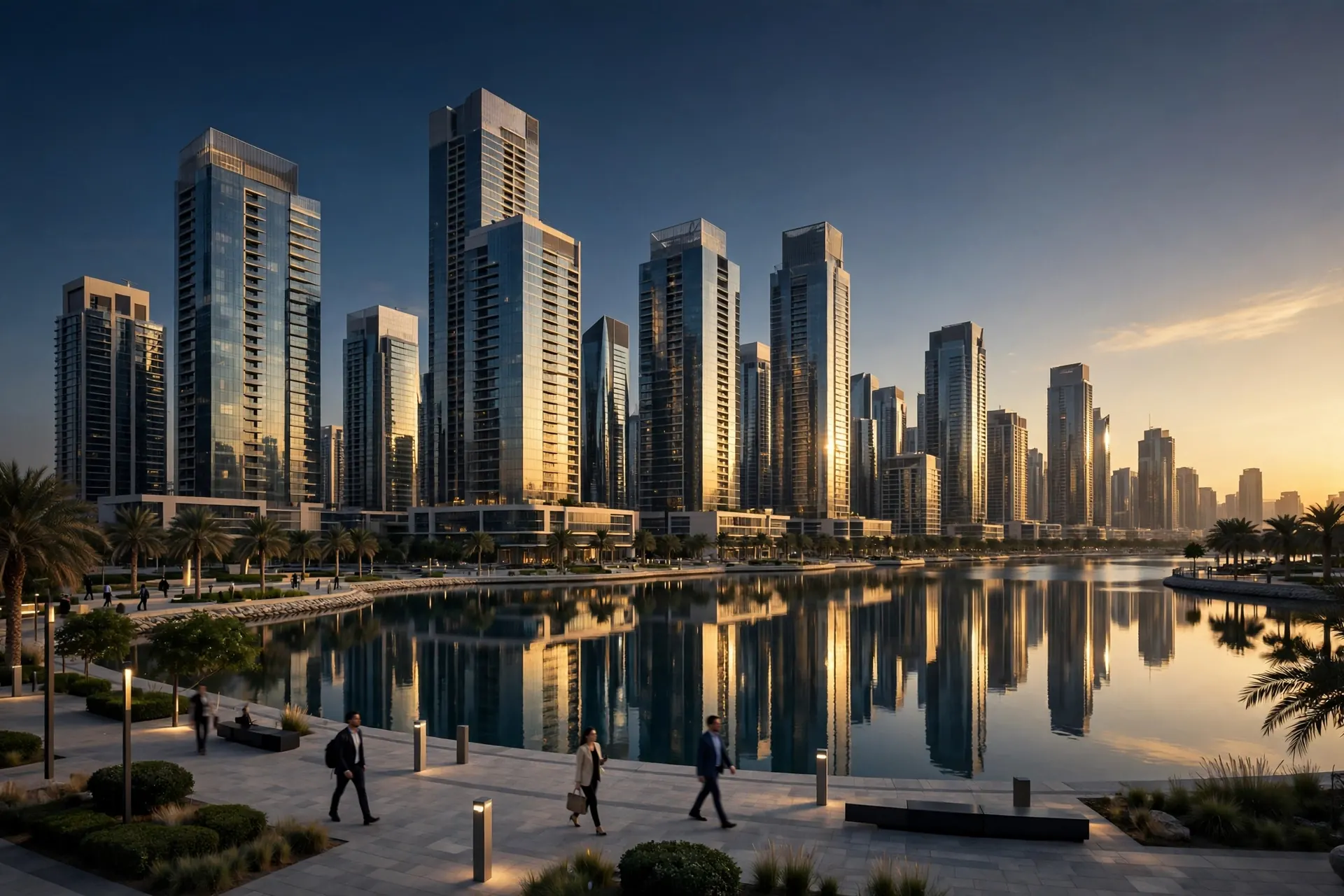
The free zone in JLT
What is DMCC, and who does it suit?
DMCC stands for Dubai Multi Commodities Centre. It is the free zone authority for Jumeirah Lake Towers, the cluster of residential and office towers built around a series of lakes in Dubai, and it grew out of commodities trading: gold, diamonds, tea, coffee and other goods that move through Dubai to markets around the world. Over the years it has grown into one of the largest free zones in the UAE, home to thousands of companies, from single-owner consultancies to trading houses with teams on several floors. The address carries weight, and for many founders that is part of the point: a JLT address on a licence and a business card reads as established, which helps when you are selling to clients who have never met you in person.
DMCC suits trading and commodities firms first, because that is what the zone was built for, and the licence activities, the trading infrastructure and the community around the zone all point that way. A commodities trader buying tea in one market and selling it in another, a small trading firm importing electronics and re-exporting them across the region, or a gold and precious metals trader who needs a credible base in Dubai will all find the zone a natural fit. It also suits consultancies and service businesses that work online or with international clients and want a premium Dubai address without a mainland licence: a management consultancy advising clients in three countries, a marketing agency whose clients are mostly overseas, or a software services firm that sells by subscription and never needs a customer to walk through its door.
It does not suit every business. If your customers need to walk in off the street, or if most of your sales happen face to face with buyers on the UAE mainland, a free zone licence will hold you back, because a free zone company generally sells outside the UAE or to other free zones, and selling directly to mainland customers usually needs a mainland licence or a distributor or agent arrangement. A retail shop, a restaurant, a salon or a business that depends on passing trade in Dubai belongs on the mainland, not in a free zone tower. The honest test is where your customers are and how they buy from you. If the answer is mostly online or mostly overseas, DMCC is worth a serious look. If the answer is mostly walk-in trade in Dubai, read our guide to mainland vs free zone in the UAE before you decide, because choosing the wrong zone is the most expensive mistake on this list, and it is the one that is hardest to undo.
Pick the activity first
DMCC licence types and permitted activities
DMCC issues three broad licence types: trading, service and industrial. A trading licence covers buying and selling goods, which is the classic DMCC business: a firm that imports consumer goods and sells them on to retailers in another country, or a commodities trader dealing in tea, coffee, metals or grains. A service licence covers consultancy and services, from management consulting and marketing to IT services and business support. An industrial licence covers light manufacturing and processing, for businesses that assemble, pack or process goods in the zone. Most new companies in DMCC take a trading or a service licence, and the choice between them comes down to what the business actually does day to day, not what sounds most impressive on a website.
Within the licence type, you choose the specific activity, and this is the decision to get right before anything else. The activity on the licence must match what the business actually does, because the licence is what a bank, a client and the authorities check when they ask what your company is allowed to do. A consultancy that also wants to trade goods needs the trading activity on the licence, and a trading firm that starts offering advisory work needs the service activity added. Trying to run a business under the wrong activity causes trouble at the bank account stage, where the bank compares the licence activity with the transactions it sees, and it causes trouble later, when a client asks for an invoice for a service your licence does not cover.
Changing the activity later costs time, so get it right first. An amendment means a fresh application, a fresh approval and a fresh wait, and while it is being processed the business cannot invoice for the new activity. Before you apply, write down in plain words what the business will sell in its first year, who will buy it, and how the money will flow, then match the activity to that list. If two activities both look right, ask which one the bank and the clients will expect to see, and pick the one that covers the main income first. A small trading firm we worked with spent a week debating between two similar activities, then chose the one that matched its supplier contracts, and its bank account opened without a single query about what the company does. That week of care saved a month of corrections.
The verified figures
What a DMCC setup costs
A DMCC trading or service licence costs AED 20,285 a year, and the one-year renewal is AED 20,265. The establishment card, which a company needs before it can sponsor visas, costs AED 1,825. That puts licence plus card at AED 22,110 before any visa cost. Visa costs sit on top of that base, and there is no single verified DMCC visa figure, so any quote that gives you one neat total for licence, card and visas is a quote to question. Ask for the visa lines in writing, line by line, before you compare DMCC with other zones, because the visa lines are where two quotes for the same setup can differ by thousands of dirhams. For the full five-zone comparison, including how DMCC sits against the lower-cost zones, see our guide to UAE free zone company setup costs compared. If you are weighing a cheaper zone against the DMCC premium, our guide to Ajman free zone business setup sets out the lower-cost alternative. For the detail on Dubai licence fees more broadly, the 2027 fee breakdown lives in our guide to business licence costs in Dubai for 2027.
Budget for the whole first year, not just the licence fee. The licence and the card are the fixed base, and on top of them come the visas, the workspace package, the bank account costs if any, and the accounting and audit costs that follow the licence. A founder who budgets only the licence fee will be surprised twice: once when the visa and card lines arrive, and again at renewal, when the licence fee comes round a second time. The honest way to compare zones is to compare the same basket in each one: licence, card, visas for the people you actually plan to sponsor, and workspace. On that basis DMCC is a premium zone, and it is worth the premium when the address, the trading community and the credibility of the licence bring in business. When they do not, a cheaper zone may be the better commercial choice, and that is a decision to make with the numbers in front of you, not after the licence is paid for.
In order, no shortcuts
How to set up in DMCC: the steps in order
A DMCC setup follows a fixed order, and each step depends on the one before it. Skipping ahead creates rework, so the sequence below is the one to follow, whether you handle it yourself or we handle it with our licensed partners.
- Choose the activity and the licence type: trading, service or industrial, matched to what the business will actually sell in its first year.
- Reserve the trade name, checking that it is available and that it fits the naming rules for the zone.
- Prepare and submit the application with the documents, including passport copies, photos and a short description of the business activity.
- Receive the initial approval, which confirms the activity and the name can proceed.
- Choose a flexi-desk or office and sign the lease, because the workspace package sets the visa allocation and part of the cost.
- Pay the licence fee and receive the licence, which is the document that makes the company real.
- Get the establishment card, which the company needs before it can sponsor any visa.
- Apply for visas, in order: entry permit, medical test, Emirates ID, then visa issuance.
- Open the bank account, once the licence is issued, with the licence, the establishment card and the shareholder and director documents.
- Set up accounting and tax registrations, so the books start clean from the first transaction and corporate tax and VAT are checked at setup, not discovered later.
With complete documents, a DMCC setup usually moves in weeks rather than months. The timing depends on the activity approval, the office or flexi-desk lease, and the visa steps that follow the licence. The most common delay is a document that has to be corrected halfway through, so the fastest way to keep the setup moving is to confirm the document list and the activity before you apply. A second common delay is the lease: a founder who leaves the workspace decision until after the licence is issued has to wait for the lease before the visas can start, so choose the workspace at the same time as the licence, not after it.
Get the file ready first
Documents you will need
The document list for a DMCC setup is short, but every item has to be correct, because a wrong copy or a missing page sends the application back to the start of the queue. Gather the file before you apply, and check each item against the list the authority gives you for your activity.
- Passport copies for each shareholder and director, with at least six months of validity left, and clear scans of every page that carries a stamp or a visa.
- Passport photos in the format asked for, recent and against a plain background.
- Application forms completed and signed, with the trade name, the activity and the shareholder details filled in exactly as they appear on the passports.
- A short description of the business activity in plain words: what the company will buy or sell, who the customers are, and where they are based.
- Proof of address or residence where asked for, such as a utility bill or a tenancy contract, in the name of the shareholder.
Requirements vary by activity and nationality, so confirm the list before applying, and ask whether any document needs attestation or translation. A shareholder who already holds a UAE residence visa will usually need the visa page and Emirates ID as well, and a corporate shareholder needs its own set of company documents. The rule is simple: the list you are given is the list that counts, and a document that is almost right is a document that will be sent back. Prepare the file once, prepare it properly, and the application moves without a second round.
Card first, then visas
Visas and the establishment card
The establishment card comes before visa sponsorship. A company cannot sponsor a visa until the card is issued, which is why the card fee of AED 1,825 sits in the base cost of the setup rather than in the visa lines. Once the card is in hand, the visa steps run in a fixed order: entry permit first, then the medical test, then Emirates ID, then visa issuance. Each step depends on the one before it, so a delay in the medical test holds up the Emirates ID, and a delay in the Emirates ID holds up the visa. Plan the sequence around the people who need to be in the country, and start the visa steps as soon as the card arrives, rather than leaving them until the office is ready.
The workspace choice affects how many visas a company can sponsor, so confirm the visa allocation with the package before signing. A flexi-desk package covers fewer visas than a larger office, and a founder who signs a small package and then plans to hire four people will find the fourth visa has nowhere to go. The allocation is part of the package, not a separate promise, so ask for it in writing as part of the package, with the price of adding visas later if the team grows. A consultancy that starts with two founders and plans to hire a third person in six months should know before signing whether the package covers that third visa, or what it will cost to move to a package that does. Visa costs sit on top of the licence and card base, and there is no single verified DMCC visa figure, so get the visa lines in writing for the exact number of people you plan to sponsor, and compare packages on that basis, not on the licence fee alone.
After the licence arrives
Bank account after your DMCC licence
Open a corporate account once the licence is issued, because the bank needs the licence before it will start its checks. The bank will ask for the licence, the establishment card, the shareholder and director documents, and a description of the business: what it sells, who the customers are, and where the money comes from. For a trading firm that means supplier and buyer details, and for a consultancy it means client contracts or letters of intent. The more clearly the business can be explained, the faster the checks run, so prepare a one-page description of the business before the bank meeting, and bring the same documents the licence application used, so nothing has to be fetched twice.
Banks run their own checks, so allow time and keep records clean from day one. A bank account is not automatic, and the bank may ask follow-up questions about a transaction, a supplier or a customer before the account is fully active. Answer those questions promptly and in full, because a slow answer slows the account, and an incomplete answer can stop it. Keep the company records tidy from the first transaction: invoices, contracts and receipts filed as they arrive, so that when the bank asks for evidence of a payment, the answer is a file, not a search. A small trading firm that kept its supplier invoices in one folder from the first shipment had its account active within weeks of the licence, while a firm that had to reconstruct six months of payments from email threads waited far longer, and the difference was not the bank, it was the records.
Match the desk to the hiring plan
Office and flexi-desk options in DMCC
DMCC offers three levels of workspace, and the right one depends on how the team actually works. A flexi-desk suits a small team that works remotely or travels most of the time: a desk you can use when you need it, a business address in JLT, and the lowest cost. A serviced office suits a team that needs desks every day, with meeting rooms, reception and a place clients can visit. A leased office in JLT suits a larger team that wants its own space, its own layout and room to grow. Each step up costs more, and each step up carries more visa capacity, so the choice is a trade between cost, capacity and presence.
The workspace decision affects cost and visa capacity, so match it to the hiring plan, not to the cheapest headline. A consultancy with two founders who work from home and meet clients online will waste money on a serviced office it never uses, and a trading firm that plans to hire five people in its first year will waste more by signing a flexi-desk package that cannot sponsor them. Write down the hiring plan for the first year before you choose: how many people, when they join, and where they will sit. Then pick the smallest package that covers that plan with room for one more hire, and ask in writing what it costs to move up when the team grows. The cheapest package on the price list is only cheap if it covers the visas and the desks you actually need.
Stay compliant after setup
Renewal and compliance basics
A DMCC licence renews every year, and the renewal fee for a trading or service licence is AED 20,265 for one year. Put the renewal date in the calendar the day the licence arrives, because a late renewal carries penalties and can freeze the establishment card and the visas that depend on it. The renewal is also the moment to check the activity still matches the business: if the company has added a service or started trading a new product, the licence should be updated at renewal rather than left to drift.
Audited financial statements are required for DMCC companies, and the audit must be done by an auditor on the DMCC approved list, with the statements prepared under IFRS. The deadlines, the approved auditors and the filing steps are set out in our guide to DMCC accounting and audit, which covers the audit side in full, so this guide does not repeat it. Corporate tax and VAT registration depend on the business, so check them at setup and keep books from the first transaction. A company that keeps clean books from day one finds renewal and audit straightforward, while a company that starts bookkeeping six months in finds both painful. The cheapest compliance is the compliance that is built into the routine, not bolted on at the deadline.
Learn from the common errors
Common DMCC setup mistakes
Most DMCC setups that run into trouble fail on one of five points, and all five are avoidable with a little care at the start. Check your own plan against this list before you apply.
- Picking the wrong activity. The licence activity does not match what the business actually sells, so the bank asks questions and the activity has to be amended later, at the cost of time.
- Budgeting only the licence fee and forgetting the card and visas. The licence is AED 20,285, but the card adds AED 1,825 and the visas sit on top, so a budget built on the licence fee alone runs short before the setup is finished.
- Choosing a desk package that does not cover the visas planned. A flexi-desk package is signed for the price, then the hiring plan needs more visas than the package allows, and the company has to upgrade mid-year.
- Leaving the bank account until last. The licence arrives, the team is ready, and the bank account is still in its checks, so the company cannot receive payments. Start the bank account as soon as the licence is issued.
- Ignoring the renewal and audit calendar after the licence arrives. The licence is framed and forgotten, the renewal date passes, and the audit deadline arrives with books that were never kept. Put both dates in the calendar on day one.
One more point on cost: if the DMCC figures above stretch the budget, it is worth comparing the lower-cost zones before you commit, and our guide to Ajman free zone business setup sets out the cheaper route. The right zone is the one whose cost, visa capacity and address fit the business you actually plan to run, not the one with the lowest headline licence fee.
How we help
How BizNex helps with a DMCC setup
We handle DMCC setups end to end, and it starts with a Free Finance Review, where we look at your business before we talk about a licence. We ask what the company will sell, who the customers are, how many visas you plan to sponsor, and where the team will sit, then we match the activity, the licence type and the workspace package to those answers. If DMCC is not the right zone for your business, we say so, and we point you to the zone that fits, because a setup in the wrong zone is a setup that has to be fixed later.
We provide all services, ourselves and with our licensed partners, and the setup work is delivered with our licensed partners, so the application, the trade name, the lease, the establishment card and the visa steps are handled in the right order, with the costs confirmed in writing before you pay them. The bank account and the accounting setup follow the licence, so the books start clean from the first transaction and the corporate tax and VAT position is checked at setup, not discovered at the first deadline. If you want to see the full service behind the setup, our business setup in Dubai page sets out mainland and free zone setup end to end, and the next step is a Free Finance Review, where the plan that follows is based on your business, not on a guess.
Frequently asked questions
DMCC free zone business setup: your questions, answered
How much does a DMCC licence cost per year?
A DMCC trading or service licence costs AED 20,285 a year, and the one-year renewal is AED 20,265. The establishment card costs AED 1,825, so licence plus card comes to AED 22,110 before any visa cost. Visa costs sit on top of that base, so ask for the visa lines in writing before you compare DMCC with other zones.
How long does it take to set up a company in DMCC?
With complete documents, a DMCC setup usually moves in weeks rather than months. The timing depends on the activity approval, the office or flexi-desk lease, and the visa steps that follow the licence. The fastest way to keep it moving is to confirm the document list and the activity before you apply, so nothing has to be corrected halfway through.
Can a DMCC company trade on the UAE mainland?
Not directly. A DMCC company is a free zone company, so it generally trades outside the UAE or with other free zones. Selling directly to customers on the UAE mainland usually needs a mainland licence or a distributor or agent arrangement. If most of your customers are on the mainland, compare both routes before you choose a zone.
How many visas can a DMCC company sponsor?
It depends on the licence package and the workspace you choose. A flexi-desk package covers fewer visas than a larger office, so confirm the visa allocation in writing as part of the package before you sign. If you plan to hire more staff later, check how the allocation grows with the workspace.
Does a DMCC company need an audit?
Yes. DMCC companies must file audited financial statements prepared under IFRS, and the audit must be done by an auditor on the DMCC approved list. The deadlines, the filing steps and the common mistakes are set out in our DMCC accounting guide, which covers the audit side in full.
Do I need a physical office in DMCC?
You need a workspace package, but it does not have to be a full office. A flexi-desk suits a small team that works remotely, a serviced office suits a team that needs desks every day, and a leased office in JLT suits a larger team. The package you choose affects your visa allocation, so match it to your hiring plan.
Related guides
Keep reading: the setup guides behind this one
Free Finance Review
Set up in DMCC with the costs confirmed in writing
Bring your business activity, your hiring plan and your budget to a Free Finance Review, and we will plan your DMCC setup with the licence, the card and the visa lines confirmed before you pay anything.